
5 Marine Animals Every Diver Hopes to See at Least Once
Every diver keeps a mental list. It might not be written down anywhere, but it’s there: the handful of animals that would make a trip unforgettable if you were lucky enough to share the water with them. For some, it’s the thrill of something enormous gliding past. For others, it’s the patience-rewarding hunt for something tiny and bizarre tucked into the reef. Whatever your style, certain encounters have a way of staying with you long after you’ve rinsed your gear and gone home.
Here are five marine animals that sit near the top of nearly every diver’s wish list, plus a little about where and how you might cross paths with them.
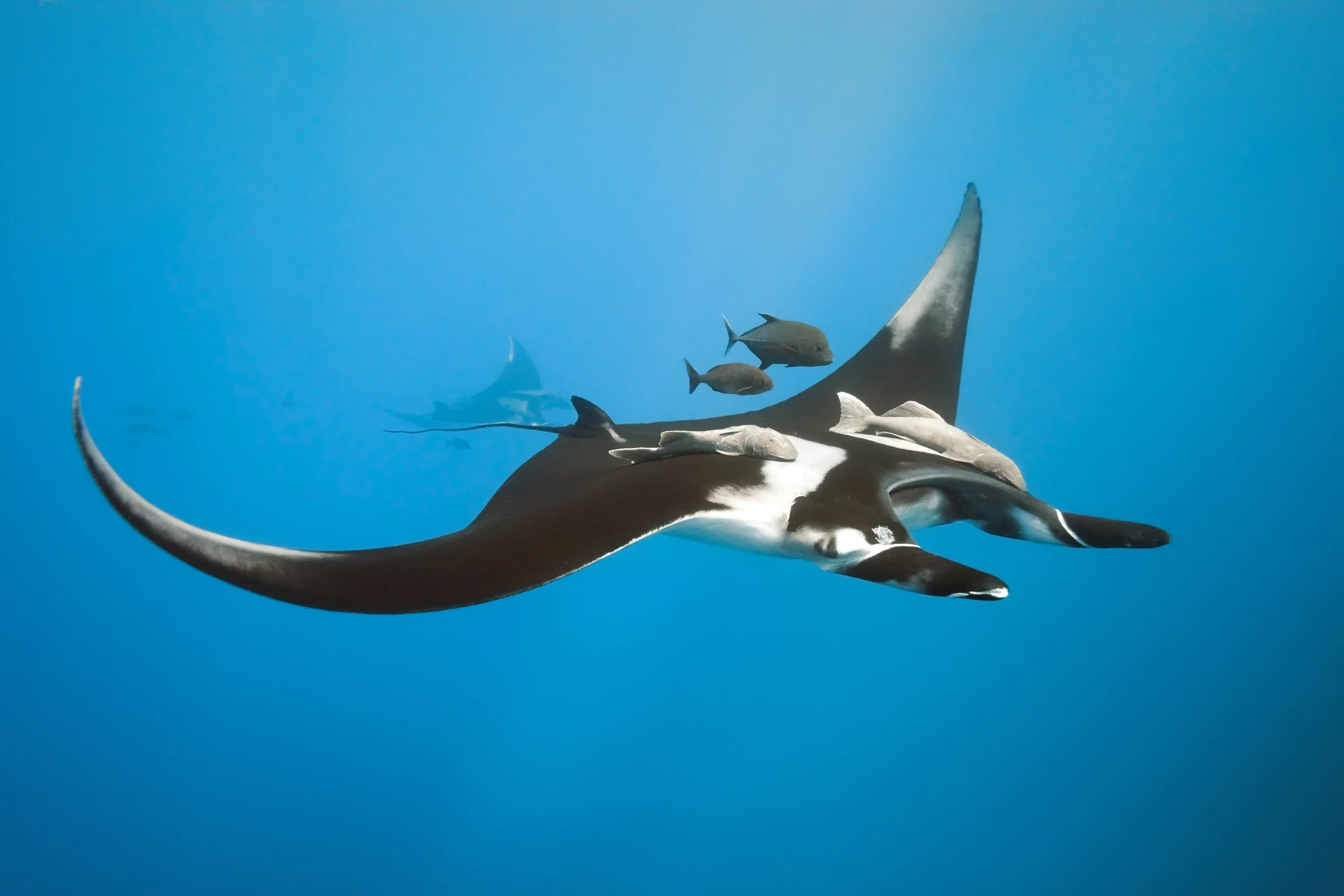 Manta Rays
There’s a reason mantas show up on so many bucket lists. With wingspans that can stretch beyond 20 feet, these gentle giants move through the water with a grace that feels almost impossible for something so large. Watching a manta bank, roll, and loop through a feeding frenzy of plankton is the kind of moment that turns casual divers into lifelong ones.
Mantas are filter feeders, completely harmless, and surprisingly curious. At cleaning stations, they’ll hover patiently while smaller fish pick parasites from their skin, giving divers an unusually long and intimate look. Spots like Hawaii’s Kona coast, the Maldives, and parts of Indonesia are famous for reliable manta encounters, especially at night dives where lights attract clouds of plankton and the mantas that follow.
The best advice for a manta encounter? Stay calm, stay low, and let them come to you. Chasing rarely works, and patience almost always pays off.
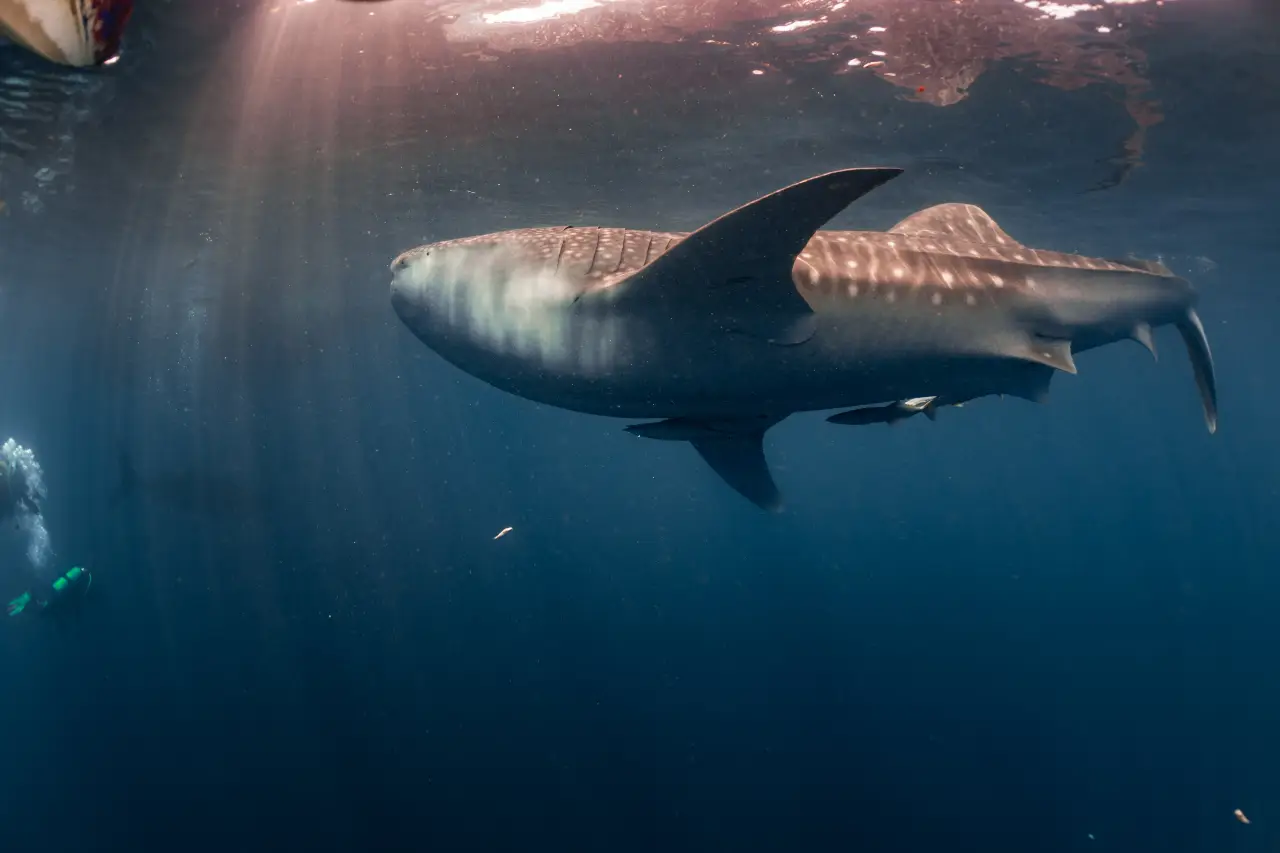 Whale Sharks
The largest fish in the ocean is also one of the most beloved. Despite their size, whale sharks are slow-moving filter feeders with no interest in divers beyond mild curiosity. Swimming alongside one, dwarfed by its spotted flank, is consistently described as a life-changing experience, even by veterans with thousands of logged dives.
Whale sharks tend to congregate seasonally where plankton blooms and small fish gather. Divers chasing these encounters often add scuba diving in the Philippines to their travel plans, but you’ll find whale sharks in plenty of other corners of the world too, from the waters off Mexico’s Yucatán Peninsula to Western Australia’s Ningaloo Reef and the coast of Mozambique. Timing matters enormously, so research the season before you book.
A note on ethics: whale shark tourism varies widely in how responsibly it’s run. Look for operators that respect distance guidelines and don’t feed or bait the animals, as feeding can disrupt natural behavior and migration patterns.
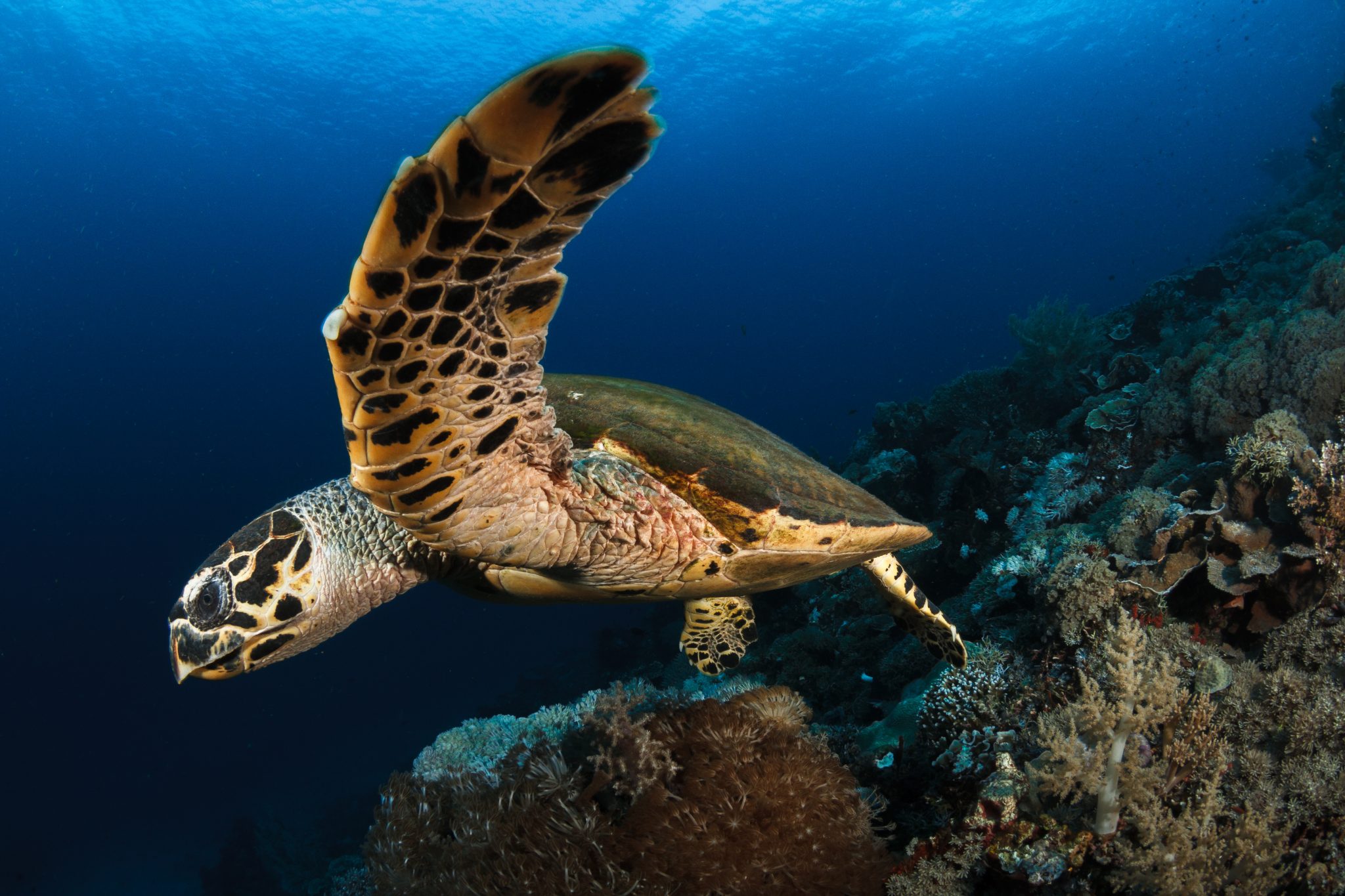
A hawksbill turtle (Eretmochelys imbricata) swims through clear water above a tropical Pacific coral reef.
Sea Turtles
If mantas and whale sharks are the showstoppers, sea turtles are the beloved regulars. There’s something deeply calming about watching a turtle graze on seagrass or rest under a coral ledge, utterly unbothered by your presence. They’ve been navigating the oceans for over 100 million years, and that ancient, unhurried quality comes through in every slow flap of their flippers.
Green turtles and hawksbills are the species divers encounter most often on tropical reefs. Hawksbills, with their pointed beaks and stunning patterned shells, tend to favor reefs rich in sponges, while green turtles often graze in shallower seagrass beds. Both are reliably found across the Caribbean, the Red Sea, Southeast Asia, and the Pacific.
Turtles are also a reminder of why conservation matters. Several species remain endangered, and the reefs they depend on are under pressure worldwide. Encountering one in the wild is a privilege worth protecting.
 Frogfish
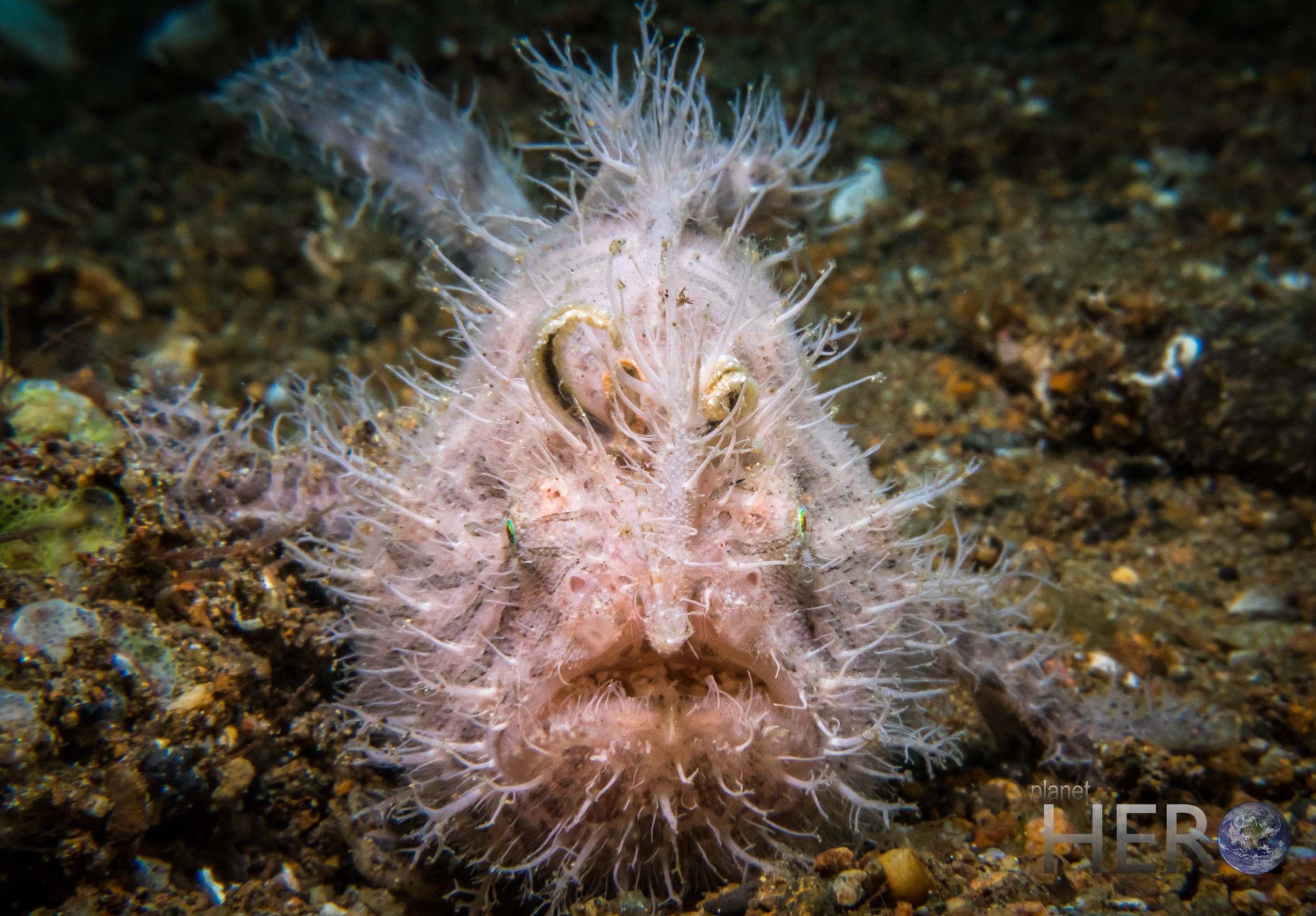
Not every dream animal is huge. For a certain kind of diver, especially the macro photographers, the real treasure is the frogfish. These oddball ambush predators are masters of disguise, blending so completely into sponges and coral that you can swim right past one without ever noticing. Spotting your first frogfish, sitting motionless and perfectly camouflaged, feels like solving a puzzle.
Frogfish don’t swim so much as “walk” along the bottom using modified, leg-like fins. They lure prey with a tiny built-in fishing rod, then strike with one of the fastest gulps in the animal kingdom, swallowing prey in a fraction of a second. Their colors range from neon yellow to deep maroon to mottled brown, and they can slowly change shade to match their surroundings.
Because they’re so well hidden, frogfish are often easiest to find with a knowledgeable local guide who knows exactly which sponge to check. They’re a perfect example of why slowing down and looking closely can be more rewarding than racing across a reef.
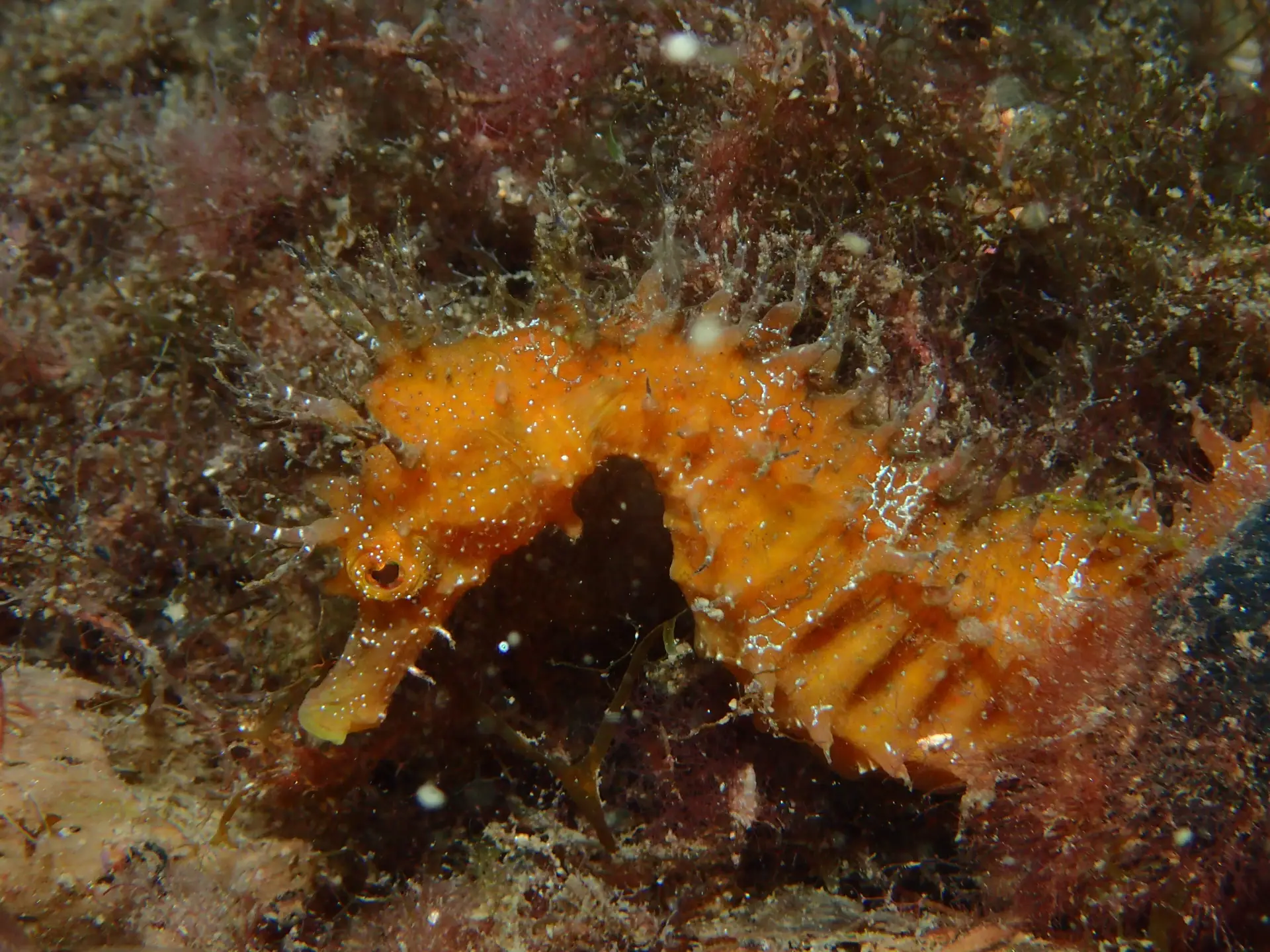 Seahorses
Few animals delight divers quite like the seahorse. Delicate, slow, and almost mythical-looking, they wrap their tails around coral and seagrass and sway gently with the current. Finding one requires a patient eye, which is exactly what makes the discovery so satisfying. Pygmy seahorses, some no larger than a grain of rice, take that challenge to an extreme and are a genuine prize for macro enthusiasts.
Seahorses are unusual in many ways. They’re poor swimmers, relying on a tiny fluttering dorsal fin, and famously, it’s the males that carry and give birth to the young. Their reliance on specific habitats, particularly seagrass beds and certain corals, makes them sensitive indicators of reef health.
Because seahorses are so small and well camouflaged, they reward divers who develop good buoyancy and a habit of scanning slowly and carefully. Resist the urge to touch or reposition them for a photo; a respectful distance keeps both the animal and its habitat safe.
Building Your Own Wish List
The beauty of diving is that the ocean is endlessly varied, and no two encounters are ever quite the same. You might travel halfway around the world hoping for a whale shark and instead have your trip defined by a curious turtle or a perfectly camouflaged frogfish you almost missed. That unpredictability is part of the magic.
If you’re just starting to build your own list, remember a few things. Research the season, since most of these animals follow predictable patterns. Choose responsible operators who put the animals’ welfare first. And invest in the fundamentals, especially buoyancy control, which makes every encounter safer and more rewarding, whether you’re hovering beside a manta or squinting at a pygmy seahorse.
Most of all, stay curious. The divers who see the most aren’t always the ones who travel the farthest; they’re the ones who slow down, look closely, and stay open to whatever the reef decides to show them.
Ready to start checking animals off your own list? Stop by the shop, talk gear and destinations with our team, and let’s get you ready for your next unforgettable encounter beneath the surface.