
The Best Places In The World To Dive With Dolphins In The Wild
For many scuba divers, a dolphin encounter is the “Holy Grail.” These highly intelligent, social, and playful marine mammals possess a charisma that few other creatures can match. However, there is a massive distinction between “swim-with-dolphin” programs in chlorinated tanks and the raw, unpredictable magic of seeing them in the open ocean.
True dolphin encounters happen on their terms, not ours. When a pod chooses to stay and play with a group of divers, it is a rewarding experience built on mutual curiosity. If you are looking to cross this off your bucket list, these are the most consistent and spectacular places in the world to find them.
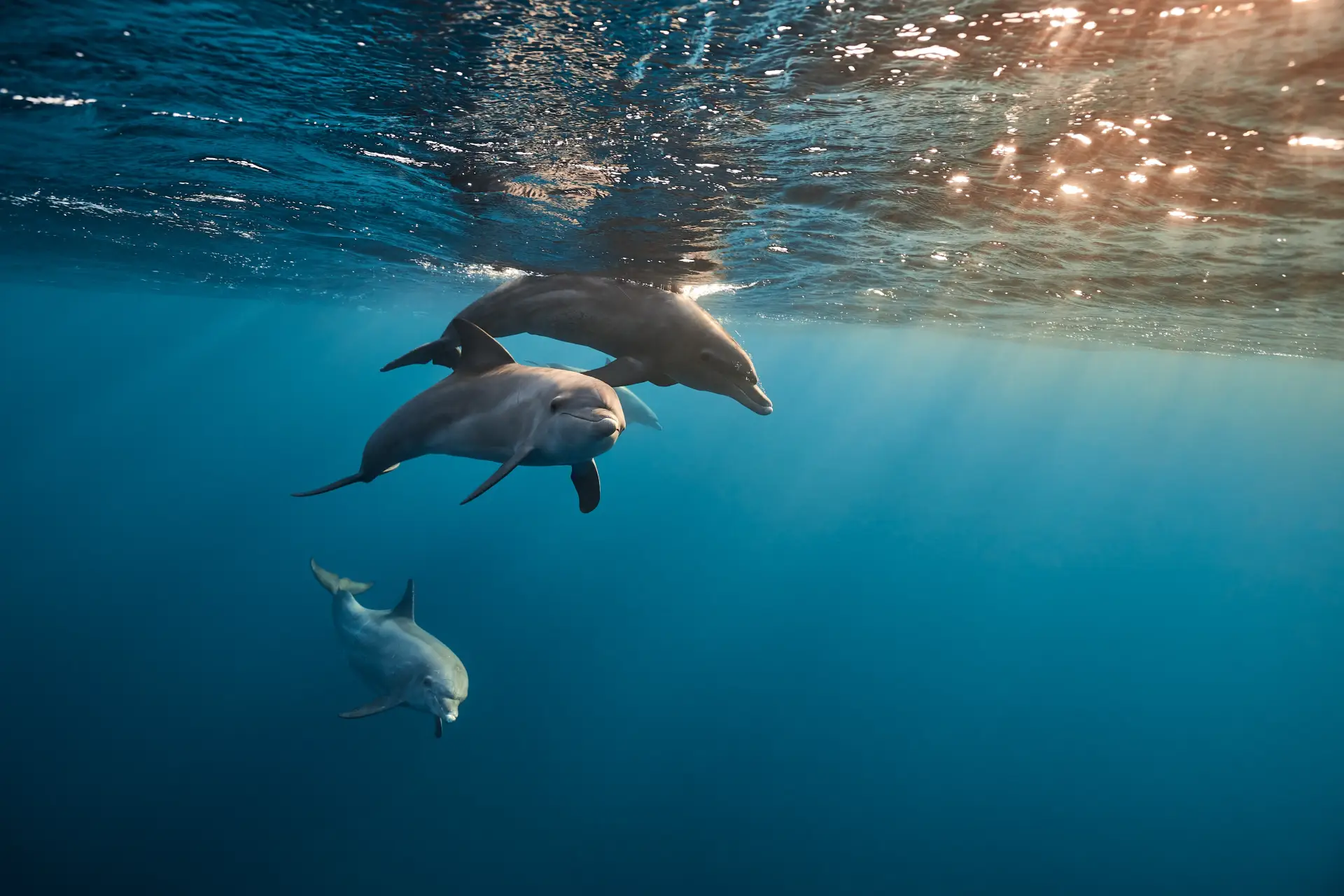 1. Hurghada, Egypt (The Red Sea)
The diving in the Red Sea is world-renowned for its visibility and vibrant reefs, but for dolphin lovers, Hurghada is the crown jewel. This region is home to several resident pods of Indo-Pacific Bottlenose and Spinner dolphins. Unlike many locations where sightings are a “lucky accident” during a reef dive, Hurghada has specific sites where encounters are almost a daily occurrence.
The Signature Site: Sha’ab El Erg (Dolphin House) Located north of Hurghada, this horseshoe-shaped reef provides a natural shelter from the open sea. Dolphins use this lagoon as a place to rest, socialize, and nurse their young during the day. Because the water is shallow (typically 5 to 15 meters) and the bottom is bright white sand, the visibility is often a staggering 30+ meters.
The Experience: Diving here is unique because the dolphins are often the ones initiating the contact. It is not uncommon for a pod of 10 to 20 individuals to swirl around a group of divers, mimicking their movements and clicking loudly. For those diving with local experts in Hurghada, the key is to stay calm and let the dolphins approach you. The shallow depths make it an ideal spot for both beginners and experienced photographers who want to capture high-key, sun-drenched shots of dolphins against a turquoise backdrop.
2. Bimini, Bahamas
The Bahamas has long been the gold standard for clear-water animal encounters. While Grand Bahama is famous for reef sharks, the island of Bimini is the world’s premier destination for Atlantic Spotted Dolphins.
The Experience: The “Dolphin Grounds” north of Bimini consist of shallow sand banks where the water is rarely deeper than 10 meters. The Atlantic Spotted Dolphins here are known for their incredibly high energy. They love to play in the pressure waves created by the bow of a boat, and once you are in the water, they often stay for hours.
What makes Bimini special is the water quality. The “Bahamas Blue” provides a high-contrast environment that makes the dolphins’ distinct spots—which they develop as they age—look vivid and sharp. Because the water is so shallow, you can often spend your entire tank just hovering and watching the social hierarchy of the pod unfold.
3. Socorro Island (Revillagigedo), Mexico
If you are looking for a more “hardcore” expedition, Socorro is the answer. Located roughly 250 miles off the tip of Baja California, this is a liveaboard-only destination known for its “big animal” action. While the Giant Oceanic Manta Rays are the primary draw, the Bottlenose dolphins of Socorro are legendary among the diving community.
The Experience: The dolphins at Socorro have developed a fascinating behavior: they have learned to love the sensation of scuba bubbles on their bellies. It is one of the few places in the world where wild dolphins will seek out the exhaust bubbles of divers.
These are large, robust oceanic Bottlenose dolphins. They are significantly bigger than the coastal varieties and tend to be very bold. On sites like The Boiler or Roca Partida, the dolphins will often weave between divers, hovering directly above them to catch the rising bubbles. It is an intimate, high-adrenaline encounter in the middle of the Pacific Ocean.
4. Kaikoura, New Zealand
For something completely different, head to the South Island of New Zealand. The nutrient-rich waters of the Kaikoura Canyon draw in a massive amount of marine life, including the highly acrobatic Dusky Dolphins.
The Experience: Dusky dolphins are the “gymnasts” of the dolphin world. They are known for their spectacular leaps and backflips, often jumping multiple times in a row. Diving or snorkeling with them in the temperate (and often chilly) waters of New Zealand is a high-energy affair.
The pods here can be massive—sometimes numbering in the hundreds. To keep the dolphins interested, guides often encourage divers to make noise into their regulators or swim in circles. The “Duskies” respond to this activity with intense curiosity, often buzzing past divers at incredible speeds. It is a chaotic, exhilarating, and deeply immersive experience.
5. Kona, Hawaii
The Big Island of Hawaii offers a unique “resident” experience with Hawaiian Spinner Dolphins. These dolphins spend their nights hunting in the deep offshore trenches and move into the shallow, sandy bays during the day to rest.
The Experience: Diving in Kona offers the chance to see dolphins in a very relaxed state. Because the bays are volcanic, the contrast between the dark basalt rocks and the sleek silver bodies of the dolphins is striking. While strict regulations (such as the MMPA) are in place to ensure the dolphins aren’t harassed while resting, a respectful diver who stays stationary on the bottom will often find themselves in the path of a slow-moving, graceful pod.
Kona is also one of the few places where you might get a “double header”—encountering dolphins during the day and the famous Manta Ray night dive just a few hours later.
 Ethics and Best Practices: How to Interact
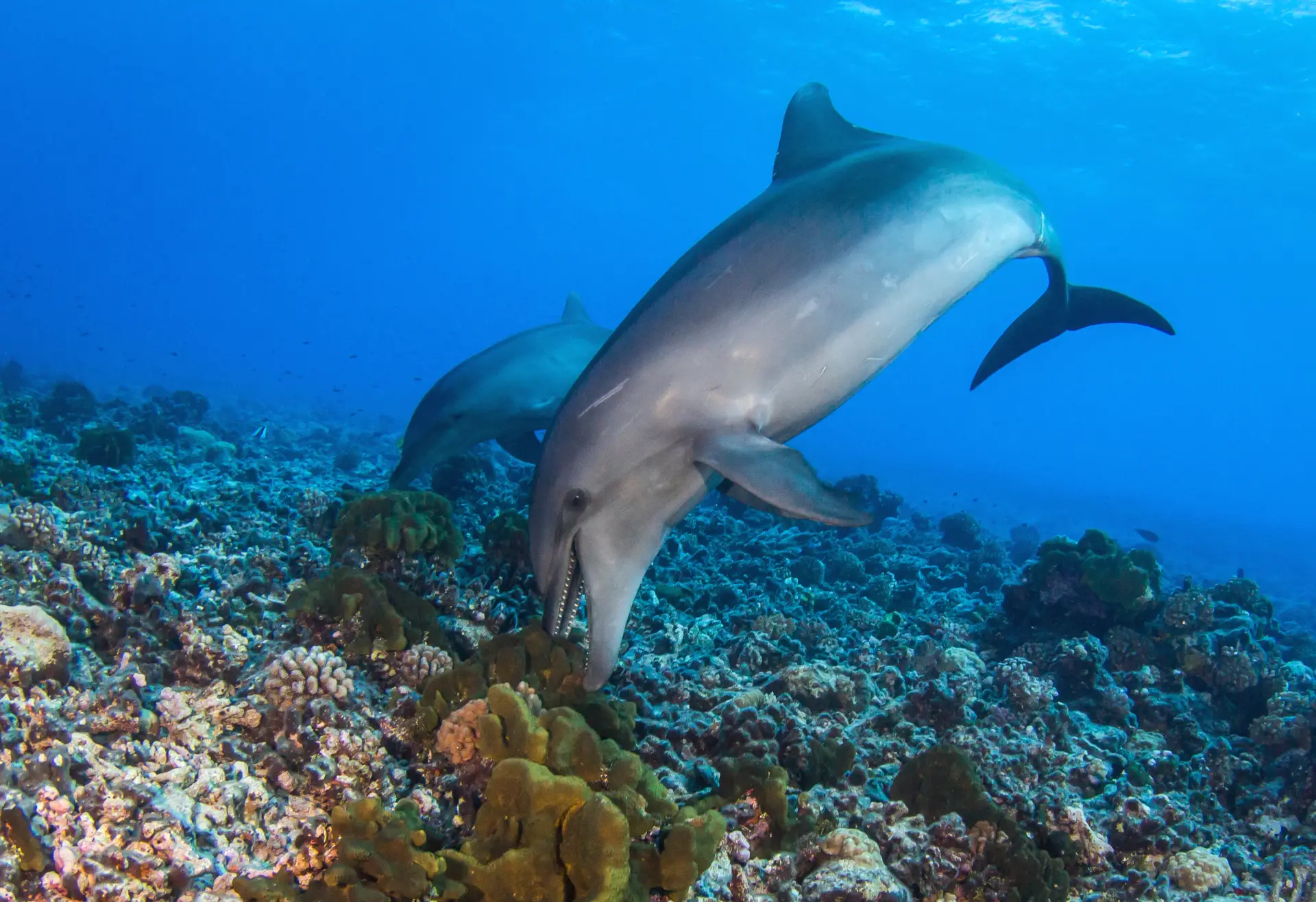
Dolphin encounters are a privilege, and as divers, we have a responsibility to ensure our presence isn’t detrimental to their well-being.
-
Don’t Chase: If a dolphin swims away, let it go. Chasing them only causes stress and ensures they won’t return.
-
Avoid Touching: Their skin is highly sensitive and prone to infection from human bacteria and oils. Plus, a 400lb wild animal can be dangerous if it feels threatened.
-
Eye Contact: Dolphins are highly sentient. Making eye contact is often the spark that initiates a long-lasting interaction.
-
Mind Your Fins: In shallow lagoons like those in Hurghada, be careful not to kick up sand or damage the reef while focusing on the animals.
Why Wild is Better
While “dolphin encounters” in tanks might offer a guaranteed photo-op, they lack the soul of a wild meeting. In the wild, when a dolphin looks at you, it’s because it wants to see you. Whether you are in the turquoise shallows of Hurghada or the deep blue of Socorro, these encounters remind us why we started diving in the first place: to connect with a world that is vastly different from our own.